

 See My Latest Article on HelloNation
Flossing is a simple daily habit that cleans areas a toothbrush cannot reach. Used correctly, it helps remove plaque and trapped food from between teeth and along the gumline, where cavities and gum irritation can begin.
Why does flossing matter?
Flossing cleans the narrow spaces between teeth and just beneath the edge of the gums. Toothbrush bristles usually cannot reach these areas well enough on their own.
Plaque is a soft, sticky film made up of bacteria and food residue. If it remains between teeth, it can contribute to tooth decay, bad breath, and gingivitis, which may cause red, swollen, or bleeding gums. Over time, plaque can harden into tartar that cannot be removed with brushing or flossing alone.
For residents of Norton Shores, MI, daily oral hygiene can be especially useful during busy school, work, and family routines when meals and snacks may happen at different times. The most effective flossing routine is one that can be followed consistently.
How often should you floss?
Clean between your teeth once each day. Many people prefer to floss in the evening before brushing, but another time can work if it is easier to maintain.
Flossing before brushing may help loosen food and plaque so brushing can clear them away. However, thorough daily cleaning matters more than the exact order. Brushing twice daily with fluoride toothpaste remains part of a complete routine.
How do you floss properly?
Follow these steps for traditional dental floss or dental tape:
1. Use enough floss.
Start with about 18 inches of floss. Wind most of it around the middle finger of one hand and the remainder around the other middle finger. This allows a clean section to be used between each pair of teeth.
2. Hold a short section firmly.
Keep about 1 to 2 inches of floss stretched between your thumbs and index fingers. A shorter working section gives better control.
3. Guide the floss gently between two teeth.
Use a slow back-and-forth motion rather than snapping the floss downward. Forcing it can cut or bruise the gums.
4. Curve the floss around one tooth.
When the floss reaches the gumline, shape it into a “C” against the side of the tooth. Gently slide it up and down, moving slightly below the gumline without forcing or sawing aggressively.
5. Clean the neighboring tooth.
The same space has two tooth surfaces. Curve the floss around the adjacent tooth and repeat the up-and-down motion.
6. Move to a fresh section.
Unwind clean floss as you move from one space to the next. This helps avoid spreading debris from one area to another.
7. Do not skip the back teeth.
Clean between every tooth, including the sides of the last molars. These areas can be difficult to see and are often missed.
The motion should feel controlled and gentle. Floss should clean the tooth surface, not saw back and forth forcefully against the gum tissue.
What should you do if your gums bleed?
Bleeding during the first several days of a new flossing routine can happen when gums are inflamed or when technique is too forceful. Gentle, consistent cleaning may help reduce minor bleeding as plaque is removed.
Do not stop automatically because of light bleeding. Instead, check that the floss is being guided slowly and curved around each tooth rather than pressed sharply into the gums.
Persistent, heavy, or painful bleeding deserves attention, especially if it occurs regularly. Swelling, pus, gum recession, loose teeth, ongoing tenderness, or a bad taste may also indicate a gum problem that needs evaluation.
Is flossing still needed if you use a water flosser?
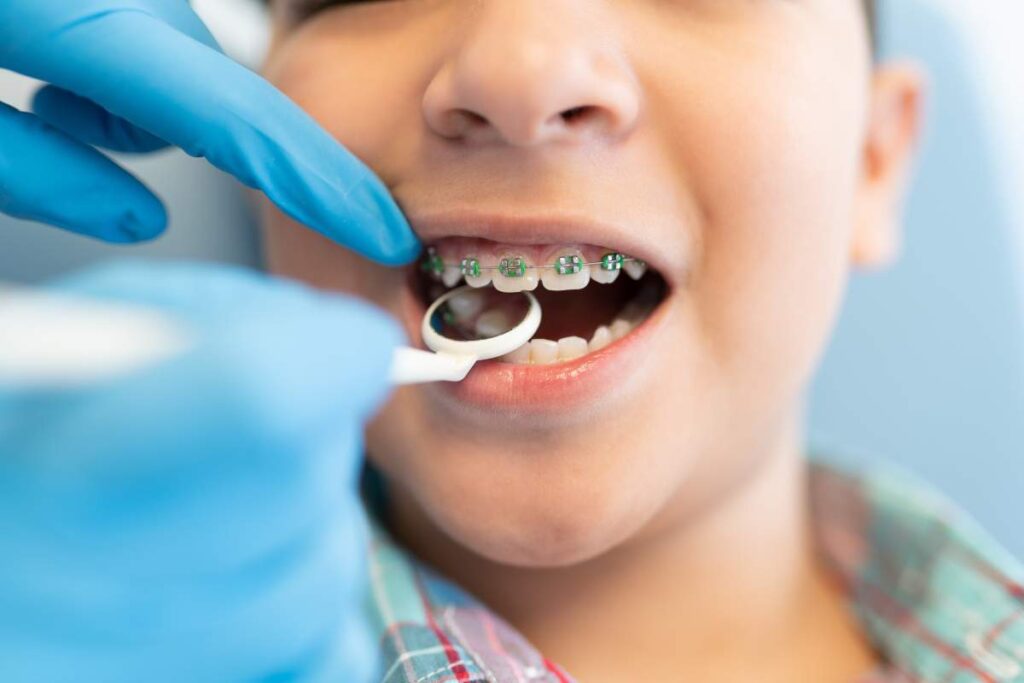
A water flosser or another interdental cleaner can be useful, particularly for people with braces, bridges, dental implants, limited hand movement, or spaces that are difficult to clean with string floss.
Traditional floss may work well when contacts between teeth are tight. Interdental brushes may be more suitable when there are wider spaces between teeth. The correct choice depends on the shape of the spaces and the condition of the gums.
A water flosser should not be used as a substitute for brushing. It is an option for cleaning between teeth, but it should be used according to the device instructions and with a comfortable pressure.
What mistakes should you avoid?
Common flossing errors include:
- Snapping floss down onto the gums
- Cleaning only where food is visibly trapped
- Moving too quickly through the back teeth
- Using the same section of floss throughout the mouth
- Flossing only occasionally before a dental visit
- Stopping permanently after mild early bleeding
- Using fingernails or sharp objects to remove food
Wooden toothpicks and improvised objects can injure the gums or damage dental work. If food repeatedly becomes trapped in one location, that pattern may be related to a cavity, a loose filling, gum changes, or the way the teeth meet.
How should children and older adults floss?
Children usually need help developing the hand control required for effective flossing. An adult can guide the floss while teaching a gentle C-shaped motion. Floss holders may make the task easier, but the surfaces between teeth still need to be cleaned carefully.
Older adults may experience dry mouth, gum recession, arthritis, reduced vision, or other conditions that make flossing harder. A floss holder, water flosser, or appropriately sized interdental brush may improve access. A brighter mirror and good lighting can also help at home, especially during darker winter mornings and evenings.
When is a different approach needed?
String floss is not ideal for every mouth. Braces, permanent retainers, bridges, implants, crowns, and larger spaces between teeth may require specialized tools or a modified technique. Floss should never be forced through a tight contact or pulled aggressively around dental work.
If floss repeatedly shreds, catches, or cannot pass through a particular space, avoid forcing it. A different interdental cleaning method may be safer and more effective for that area.
Daily cleaning between teeth works best alongside twice-daily brushing, a fluoride toothpaste, and attention to changes in the gums or teeth. The goal is not to make the gums bleed or to remove every visible speck immediately; it is to gently clean each tooth surface on a regular basis.