

 See My Latest Article on HelloNation

Brushing your teeth correctly is less about scrubbing hard and more about using the right toothpaste, brush angle, pressure, and timing. For most adults and children, the standard is simple: brush twice a day for two minutes with fluoride toothpaste, then clean between the teeth once a day. ([ada.org](https://www.ada.org/resources/ada-library/oral-health-topics/toothbrushes?utm_source=openai))
What supplies are needed?
A soft-bristled toothbrush and fluoride toothpaste are enough for effective daily brushing. Both manual and powered toothbrushes can work well when used consistently and thoroughly. Choose a brush that feels comfortable and has a head small enough to reach the back teeth without forcing it.
Replace the toothbrush or brush head every three to four months, or sooner if the bristles become bent, flattened, or visibly worn. Frayed bristles do not clean efficiently and may irritate the gums. ([ada.org](https://www.ada.org/resources/ada-library/oral-health-topics/toothbrushes?utm_source=openai))
Fluoride toothpaste helps strengthen enamel and repair early mineral loss caused by acids produced by oral bacteria. Adults generally need only a small amount—about the size of a pea. Spitting after brushing is useful, while vigorous rinsing with a large amount of water may wash away some fluoride that could continue protecting the teeth.
How should the toothbrush be positioned?
Hold the brush at about a 45-degree angle toward the gumline. This allows the bristles to clean the area where the teeth and gums meet, including just below the edge of the gums.
Use gentle, short strokes rather than long, forceful scrubbing motions. Move across two or three teeth at a time, gradually working around the mouth. Excessive pressure can contribute to gum irritation, sensitivity, and wear near the gumline without removing plaque more effectively. ([ada.org](https://www.ada.org/resources/ada-library/oral-health-topics/toothbrushes?utm_source=openai))
A useful sequence is:
- Start on the outer surfaces of the upper teeth and work around the mouth.
- Repeat on the outer surfaces of the lower teeth.
- Brush the inside surfaces of both arches.
- Clean the chewing surfaces of the back teeth.
- Turn the brush vertically for the inside surfaces of the front teeth and use several gentle up-and-down strokes.
- Lightly brush the tongue to remove bacteria and loosen debris.
The exact order does not matter as much as covering every surface.
How long should brushing take?
Brush for two full minutes, twice each day. Many people underestimate the time because they move quickly through the mouth or focus mainly on the front teeth. Dividing the mouth into four sections and spending about 30 seconds on each section can make the time easier to manage.
The nighttime brushing is especially important because plaque and food debris can remain against the teeth for hours while saliva flow decreases during sleep. Morning brushing removes bacteria and stale buildup, but it does not replace the nighttime routine.
A timer, clock, or toothbrush with a built-in pacing feature can help establish a consistent habit. In busy households, brushing immediately after a regular morning and evening routine—such as washing up or preparing for bed—can make it easier to remember.
Should brushing happen before or after breakfast?
Either timing can work, but brushing before breakfast has a practical advantage: fluoride is already on the teeth before food and acidic drinks are consumed. If brushing after breakfast, wait about 30 minutes after acidic foods or beverages before brushing. Acid can temporarily soften the enamel surface, and brushing immediately afterward may increase wear.
For people who drink coffee, juice, or other acidic beverages in the morning, rinsing with water afterward can help clear residue while waiting to brush. Water is also useful during dry indoor months in Norton Shores, when heated air and reduced humidity may contribute to a dry-mouth feeling. Dry mouth can increase discomfort and allow plaque to remain on teeth more easily.
Does brushing alone clean the whole mouth?
No. A toothbrush cannot fully clean the tight spaces between teeth. Once a day, use floss or another interdental cleaner to remove plaque and trapped food from those areas. The tool should be guided gently against the sides of the teeth rather than snapped downward into the gums.
Mouthwash may be useful for some people, but it does not replace brushing with fluoride toothpaste or daily cleaning between the teeth. Sugar-free gum can also stimulate saliva after meals when brushing is not immediately possible, but it is an addition—not a substitute for regular brushing and interdental cleaning. ([cdc.gov](https://cdc.gov/oral-health/prevention/oral-health-tips-for-adults.html?utm_source=openai))
How should children brush?
Brushing should begin as soon as the first tooth appears. Children younger than 3 generally use a smear of fluoride toothpaste about the size of a grain of rice. Children age 3 and older generally use a pea-sized amount and should be taught to spit rather than swallow it.
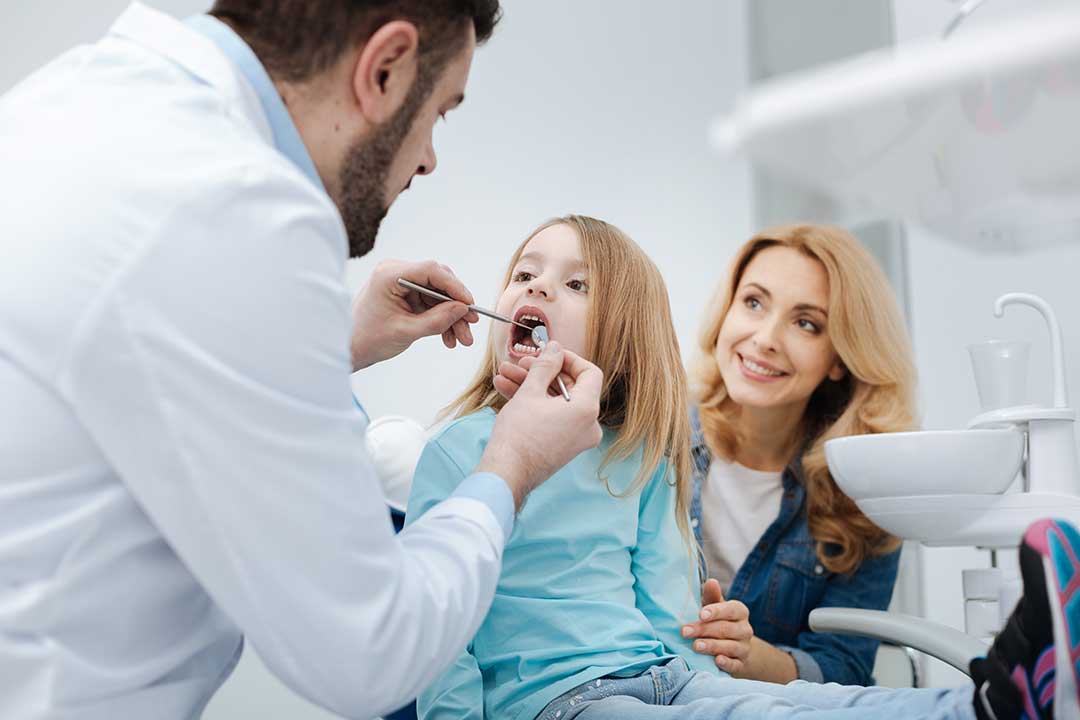
Adults should help or supervise children until they can brush all surfaces thoroughly. A child may be able to hold a toothbrush well before having the coordination needed to clean the gumline and back teeth. The CDC recommends supervision for young children and emphasizes twice-daily brushing with fluoride toothpaste. ([cdc.gov](https://www.cdc.gov/oral-health/prevention/oral-health-tips-for-children.html?utm_source=openai))
Children may respond well to brushing in the same order each time, using a song or timer that lasts about two minutes. Parents and caregivers can also brush their own teeth nearby so the routine feels ordinary rather than corrective.
What common brushing mistakes should be avoided?
Several habits can make brushing less effective:
- Using a hard-bristled brush or pressing too firmly
- Brushing only the visible front surfaces
- Skipping the gumline and back teeth
- Brushing for less than two minutes
- Using toothpaste without fluoride when cavity prevention is a concern
- Sharing toothbrushes
- Keeping a worn brush long after the bristles have spread
- Rinsing repeatedly with a large amount of water immediately after brushing
- Treating bleeding gums as a reason to stop cleaning them
Mild bleeding can occur when inflamed gums are first cleaned more consistently. However, bleeding that continues, worsening swelling, persistent pain, loose teeth, or sensitivity that does not improve should not be ignored. These symptoms can indicate gum disease, decay, infection, or another condition that needs evaluation.
How can residents keep the habit consistent?
Seasonal changes, school schedules, shift work, travel, and winter weather can interrupt routines. Keeping a spare toothbrush in a travel kit, using the same brushing order each time, and storing the brush upright where it can air-dry may help.
In shared homes, each person should have a separate toothbrush, and brushes should not touch while drying. After an illness, replacing a visibly worn brush is reasonable, but routine disinfection or soaking is generally unnecessary unless specific instructions have been provided.
The most reliable technique is gentle, complete, and consistent: fluoride toothpaste, a soft brush, a 45-degree angle toward the gums, two minutes, twice daily, plus cleaning between the teeth once a day.